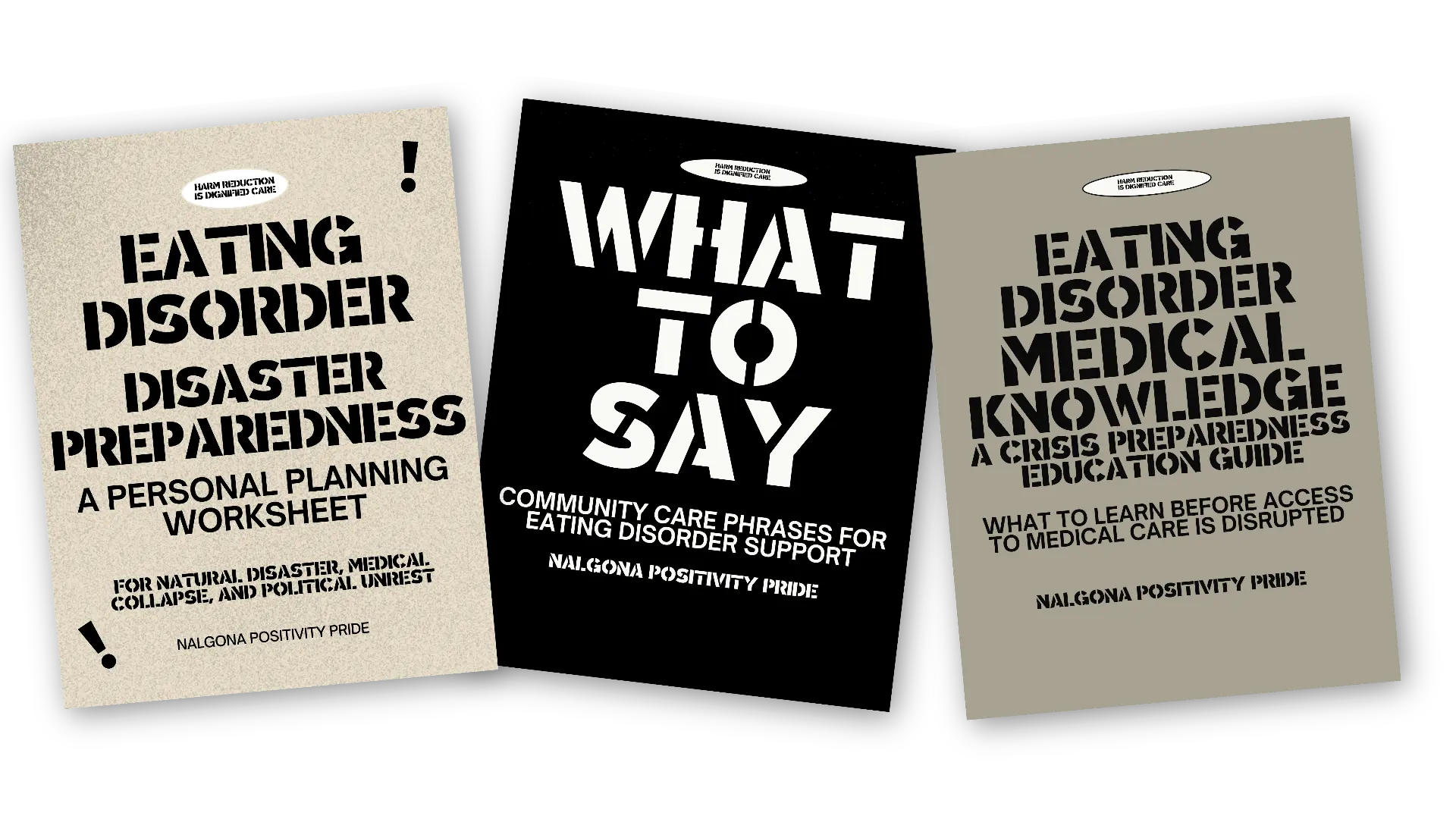
Grab your freeEating Disorder Disaster Preparedness: A Personal Planning Worksheetby clicking here
Nalgona Positivity Pride
Live Online Session · Two Dates

Eating Disorders Don't Pause in Times of Crisis

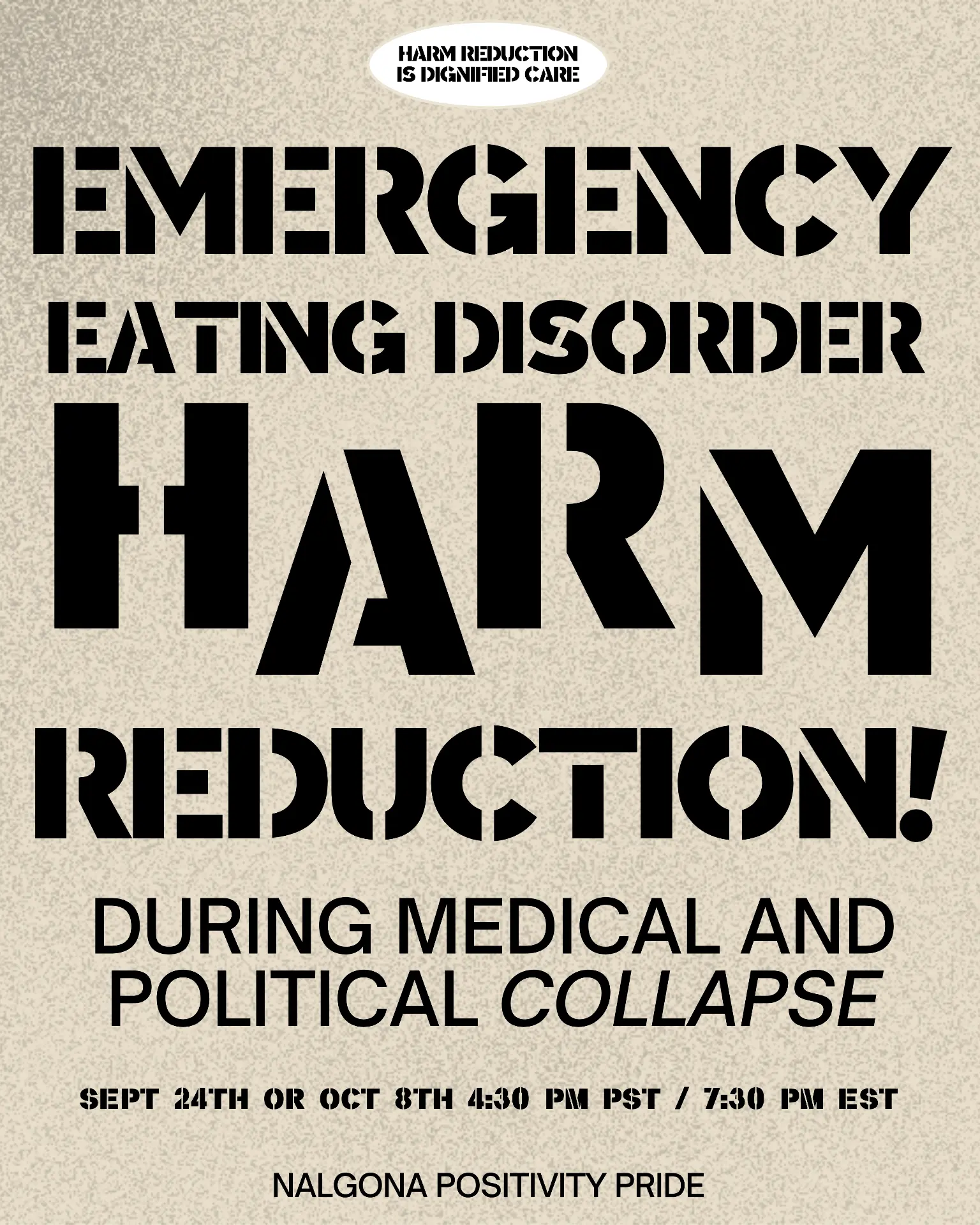
Emergency Harm Reduction During Medical and Political Collapse

Date A
Sept 24 · 4:30pm PST
Date B
Oct 8 · 4:30pm PST
Length
2 hours
Format
Live + recording
Register · $99
Regular rate $99
Cut · Paste · Pass it on
Event flyer: Eating Disorders Don't Pause in Times of Crisis, September 24 or October 8

Providers are trained for recovery, not for collapse

What happens to your clients, your community members, your people with active eating disorders when the system stops functioning?

Grounded in the literature

The medical material in this session is drawn from peer-reviewed clinical and academic literature on refeeding, electrolyte risk, purging, and malnutrition, alongside documented political and historical research. Sources are named throughout so you can read them yourself.

Peer-reviewed sources

Published clinical and academic research, cited in session

Cited 50+ times

Glo V.'s work cited in over 50 academic articles

Provider-friendly

Attended by therapists, dietitians, and ED professionals

Why this session exists

How do we care for peoplewith eating disorderswhen the systems meant to provide that careare unavailable or unsafe?

We are living through accelerating political cruelty. Violent deportations, immigration detention facilities that operate as concentration camps, Medicaid cuts. The surveillance of trans bodies and the dismantling of reproductive autonomy. Food insecurity deepening in communities that were already going without. Genocide watched in real time on a phone screen while people still have to wake up and work.

The clinical literature has largely refused to tell this history. The eating disorder treatment industry still treats symptoms as private medical episodes, as if they emerge untouched by political violence.

Harm reduction is a basic human rightHarm reduction is a basic human rightHarm reduction is a basic human rightHarm reduction is a basic human rightHarm reduction is a basic human rightHarm reduction is a basic human rightHarm reduction is a basic human rightHarm reduction is a basic human rightHarm reduction is a basic human rightHarm reduction is a basic human rightHarm reduction is a basic human rightHarm reduction is a basic human right
Access Crisis

Inaccessible for Decades

For Black, Indigenous, and communities of color, for fat people, for transgender people, for undocumented people, for people without income or insurance, eating disorder care has been effectively inaccessible for decades.

The current political moment has not created a new crisis for these communities. It has deepened an existing one while extending it to people who previously had more protection from it.

Blocked for decades
Black, Indigenous, & POC
Fat people
Transgender people
Undocumented people
People without income
People without insurance
Wall
Systemic barrier
Eating Disorder Care
Effectively closed to the communities on the left
Not a new crisis
Current political moment pushes the wall wider
Deepened, not created
Systemic Failure

The Evidence

Eating disorders have always followed the shape of power. They show up where scarcity is enforced, where bodies are surveilled and controlled, where people have been cut off from their own food systems and from each other. That relationship between political conditions and disordered eating is documented across centuries and across continents, and the evidence below makes that case directly.

Case File 01: War

Lebanese civilians during the 2006 war

Six months after the 2006 Lebanon war, 31.4% of Lebanese university students screened positive for an eating disorder. Research demonstrated that war stress and enforced food restriction produce eating disorder risk that outlasts the crisis itself.

Reference CitationAoun, A., Garcia, F. D., Mounzer, C., Hlais, S., Grigioni, S., Honein, K., and Déchelotte, P. (2013). War stress may be another risk factor for eating disorders in civilians: a study in Lebanese university students. General Hospital Psychiatry, 35(2), 135–139. https://doi.org/10.1016/j.genhosppsych.2013.02.007
Case File 02: Historical

Nazi concentration camp survivors

Prisoners in Nazi concentration camps who experienced starvation were more likely to develop binge eating behavior after liberation.

Reference CitationFavaro, A., Rodella, F. C., and Santonastaso, P. (2000). Binge eating and eating attitudes among Nazi concentration camp survivors. Psychological Medicine, 30(2), 463–466. https://doi.org/10.1017/s0033291799008521
Case File 03: Gender

Holy anorexia and gender oppression

Historian Rudolph Bell's term 'holy anorexia' describes the extreme fasting practices of women saints concentrated between the 13th and 16th centuries, when church control over women's bodies and access to religious leadership was most intensely enforced.

Reference CitationBell, R. M. (1985). Holy anorexia. University of Chicago Press. Bynum, C. W. (1987). Holy feast and holy fast: The religious significance of food to medieval women. University of California Press.
Case File 04: Colonialism

Indigenous communities under colonial food disruption

Eating disorder prevalence among Aboriginal and Torres Strait Islander Australians was estimated at 27% compared to the general population. The increased risk was largely explained by poorer psychosocial wellbeing rooted in socioeconomic disadvantage, intergenerational trauma, and the ongoing conditions of colonization.

Reference CitationBurt, A., Mitchison, D., Doyle, K., and Hay, P. (2020). Eating disorders amongst Aboriginal and Torres Strait Islander Australians: a scoping review. Journal of Eating Disorders, 8, 73. https://doi.org/10.1186/s40337-020-00346-9
Case File 05: Current

COVID-19 pandemic

Eating disorder prevalence rose from 31.8% to 51.8% among women and from 13% to 31.3% among men between 2018 and 2021. Lower food security scores and pandemic-related depression were directly associated with increased risk across all eating disorder categories.

Reference CitationTavolacci, M. P., Ladner, J., and Déchelotte, P. (2021). Sharp increase in eating disorders among university students since the COVID-19 pandemic. Nutrients, 13(10), 3415. https://doi.org/10.3390/nu13103415

When the system stops functioning

The Risks Nobody Is Preparing For

Most training assumes continuity: open pharmacies, functioning clinics, stable housing, and reliable power. This session is built for the moment those assumptions break.

Medication access disruption

When pharmacies close or prescriptions lapse, people lose psychiatric and medical medications they have been stabilized on.

Withdrawal from psychiatric meds and substances

Sudden cutoff of psychiatric medications or substances can trigger medical and psychiatric crises that outlast the original disruption.

Rapid health deterioration

Without medical monitoring, electrolyte instability, cardiac strain, and malnutrition can escalate quickly.

Increased suicidality

A population already experiencing elevated suicidality faces sharper risk when support systems and routines disappear.

Power outages

Insulin storage, medication schedules, and refrigerated meds become unstable when the grid goes down.

Electrolyte and supplement access disappears

The exact moment these supports are most needed is often when they become hardest to find.

Involuntary hospitalization and conservatorship

Expanding state authority can funnel disabled and mentally ill people into institutional control under the guise of care.

Immigration enforcement during medical emergencies

Fear of deportation and detention can keep people from seeking emergency help until a crisis is severe.

Loss of routine and structure

Meal timing, sleep, medication, and grounding practices fall apart when daily structure is disrupted.

Food supply disruption and unfamiliar emergency foods

Shelter meals, donated goods, and ration packs can trigger or intensify eating disorder behavior.

Loss of privacy in shelter environments

Eating, purging, and body-related behaviors become harder to manage when privacy and autonomy are stripped away.

Mobility concerns and physical stamina during evacuation

Malnutrition, dehydration, and exhaustion make movement and evacuation dangerous for people already physically compromised.

Unfortunately, many communities are already facing these threats.

This session prepares you to recognize them, reduce them, and care for people through them when the usual systems cannot.

Who this is for

This is for you if

  • You are watching the political moment worsen and thinking about what it means for the people you care for, organize with, or support.

  • You are a community health worker, peer supporter, mutual aid organizer, or harm reductionist who has encountered eating disorders in your work and had no framework for what you were looking at.

  • You are a provider working inside a system that is contracting around the communities that most need care, and you are looking for tools that work outside of ideal conditions.

  • You are personally living with an eating disorder and want access to the medical and political knowledge the system never made available to you.

  • You work in drug use harm reduction, sexual health, disability justice, or community organizing and understand that eating disorders belong in the same political conversation.

  • You are supporting someone whose eating disorder is intensifying under the current political conditions and you do not know what to do when professional care is unavailable or unsafe to access.

This is not for you if

  • You want harm reduction as a clinical technique with the politics removed.

  • You believe the healthcare system is functioning adequately for the communities this session is built for.

  • You are looking for a recovery roadmap or a step-by-step treatment protocol.

  • You want a space that separates eating disorder care from colonialism, fascism, food sovereignty, and the current political crisis.

One of a kind

There is no other training like this

No clinical program or credentialing course teaches emergency harm reduction for eating disorders. This material was assembled over years, outside the industry, because nothing else existed.

Grounded in political history and lived experience

The method

What keeps repeating, and what can be done about it

Harm reduction is not a permission slip. It is a set of practical choices people make when the ideal option is not available, when the clinic has failed them, or when survival means staying out of systems that cause more damage than they solve.

This session refuses the split between political analysis and medical knowledge. You need both. One without the other leaves people either well-theorized and under-supported, or stabilized and gaslit about why they got sick in the first place.

The governing principle

Match the response to the condition producing it.

That single move turns isolated facts into something usable. The same behavior can mean different things depending on access, trauma history, co-occurring conditions, and whether the person is moving toward safety or away from it.

Harm reduction is dignified care · Bodies are not battlegroundsHarm reduction is dignified care · Bodies are not battlegroundsHarm reduction is dignified care · Bodies are not battlegroundsHarm reduction is dignified care · Bodies are not battlegroundsHarm reduction is dignified care · Bodies are not battlegroundsHarm reduction is dignified care · Bodies are not battlegroundsHarm reduction is dignified care · Bodies are not battlegroundsHarm reduction is dignified care · Bodies are not battlegroundsHarm reduction is dignified care · Bodies are not battlegroundsHarm reduction is dignified care · Bodies are not battlegroundsHarm reduction is dignified care · Bodies are not battlegroundsHarm reduction is dignified care · Bodies are not battlegrounds
What this session covers

Six topics across one session

01

Refeeding Syndrome

An introduction to a complication that is often under-discussed in community settings, including signs that are commonly described in the literature and why reintroducing food after restriction is typically approached gradually.

02

Cardiac & Electrolyte Concerns

An overview of signs that researchers and clinicians frequently associate with cardiac strain, thiamine deficiency, and electrolyte depletion, and how people describe deciding when to seek emergency care.

03

Restriction & Starvation

A discussion of how the body is described as responding after very low intake, considerations people raise around reintroducing food in community settings, and what non-coercive presence can look like.

04

Purging Behaviors

An overview of risks described in the literature, including cardiac and esophageal concerns, and how shame is often discussed as a barrier to seeking care.

05

Binge Eating

A look at how restriction and binge eating are described as physiologically connected, and at acute gastric concerns that are sometimes under-recognized outside clinical settings.

06

Community Safety Planning

A conversation about how people describe building community-based plans of care when clinical options feel unavailable, unsafe, or unaffordable. Not a replacement for emergency services.

Register now

One session, two dates

Registration gives you access to all the dates. Show up to the session that best fits your schedule. You are welcome to attend both cohorts if desired.

Pay in full$99One-time paymentRegister
2 installments2 x $49.50USD monthlyRegister
3 installments3 x $33.00USD monthlyRegister

Sept 24 · 4:30pm PST / 7:30pm EST  ·  Oct 8 · 4:30pm PST / 7:30pm EST

Session by session

One session, two halves: medical foundation, then response and strategy

First half

The medical foundation

  • How medical risk is actually determined, and why higher or “normal” body size is a poor predictor.
  • Why apparent stability often precedes crisis, and what compensation hides.
  • Cardiac and neurological warning signs that require urgent care, observable without equipment.
  • Substance use, insulin-dependent diabetes, and the highest-risk combinations in eating disorder medicine.
Second half

Response, strategy, and conditions

  • Refeeding and underfeeding syndromes, and what the evidence says about reintroducing food.
  • Medication risk in malnourished bodies, including combinations that become dangerous at routine doses.
  • Harm reduction strategies organized by behavior: purging, restriction, binge eating, and compulsive movement.
  • Emergency thresholds, and community safety planning that assumes limited or no clinical infrastructure.
Important note

This session is educational, not medical or clinical care. It is not therapy, diagnosis, or treatment, and it is not a substitute for working with a qualified provider. Every medical claim comes from academic journals and clinical texts, cited on the slides. Outcomes vary, no specific result is promised, and individual situations require individualized assessment. If you or someone you know is in immediate danger, please contact local emergency services or a crisis line.

What you leave with

What You Leave With

Understanding · 01

A working understanding

How eating disorders cause death, which is information most people supporting someone have never been given.

01
Questions · 02

Specific questions

The questions to ask, and the confidence to ask them plainly.

02
Tracking · 03

A way to track

A way to track someone over months rather than reacting to visible emergencies.

03
Language · 04

Language for advocating

Language for advocating inside medical settings, including the single question that changes the trajectory of someone's care: has nutritional status been assessed.

04
Materials · 05

Recordings and materials

Recording access, slides, and worksheets: confirm what is included with your registration.

05
Bonuses
Three crisis preparedness workbooks: Disaster Preparedness worksheet, What To Say phrase guide, and Medical Knowledge education guide

Take-home materials

Every registrant leaves with downloadable tools you can use, share, and keep on hand:

  • Eating Disorder Disaster Preparedness: A Personal Planning Worksheet
  • What To Say: Community Care Phrases for Eating Disorder Support
  • Eating Disorder Medical Knowledge: A Crisis Preparedness Education Guide
Register · $99
Recording included
12 months access

From people who attended

My client has had their eating disorder for 10+ years, been through RTC, PHP, IOP and multiple outpatient therapists. I shared your resources about harm reduction after purging and they said this was the first time they have ever been told not to brush their teeth after purging and been given alternatives.

Stacy Rae Godoy
LMFT · @bolognasandwich_

Glo V. has anchored the understanding of what causes and maintains eating disorders at a much deeper level. She is showing the field that the people who have lived experience are full of wisdom that outside experts can't generate from our positions of dominant group privilege.

Deb Burgard, PhD, FAED
@bodypositivephd
Registration

Pricing that reflects what the work actually costs

Pay in full$99One-time paymentRegister
2 installments2 x $49.50USD monthlyRegister
3 installments3 x $33.00USD monthlyRegister

Registration gives you access to all the dates

Show up to the session that best fits your schedule. You are more than welcome to attend both cohorts if desired.

All sales are final. Registration includes the recording, available for 12 months.

From Glo

"I was told it did not exist."

I have asked for harm reduction support for my own eating disorder more than once. Both times I was told it did not exist, that harm reduction could not be applied to eating disorders. As a person living with a severe and enduring eating disorder, I went looking for the medical knowledge myself, past paywalls, and medical papers.

The grief in that research was the part I did not expect. I had to learn about what my own behaviors were doing to my body and mind from a journal article rather than someone on my care team or a loved one.

This work should already exist. Nobody asked me to build it. The people who need it are waiting anyway.

Glo V.
About the speaker

Glo V.

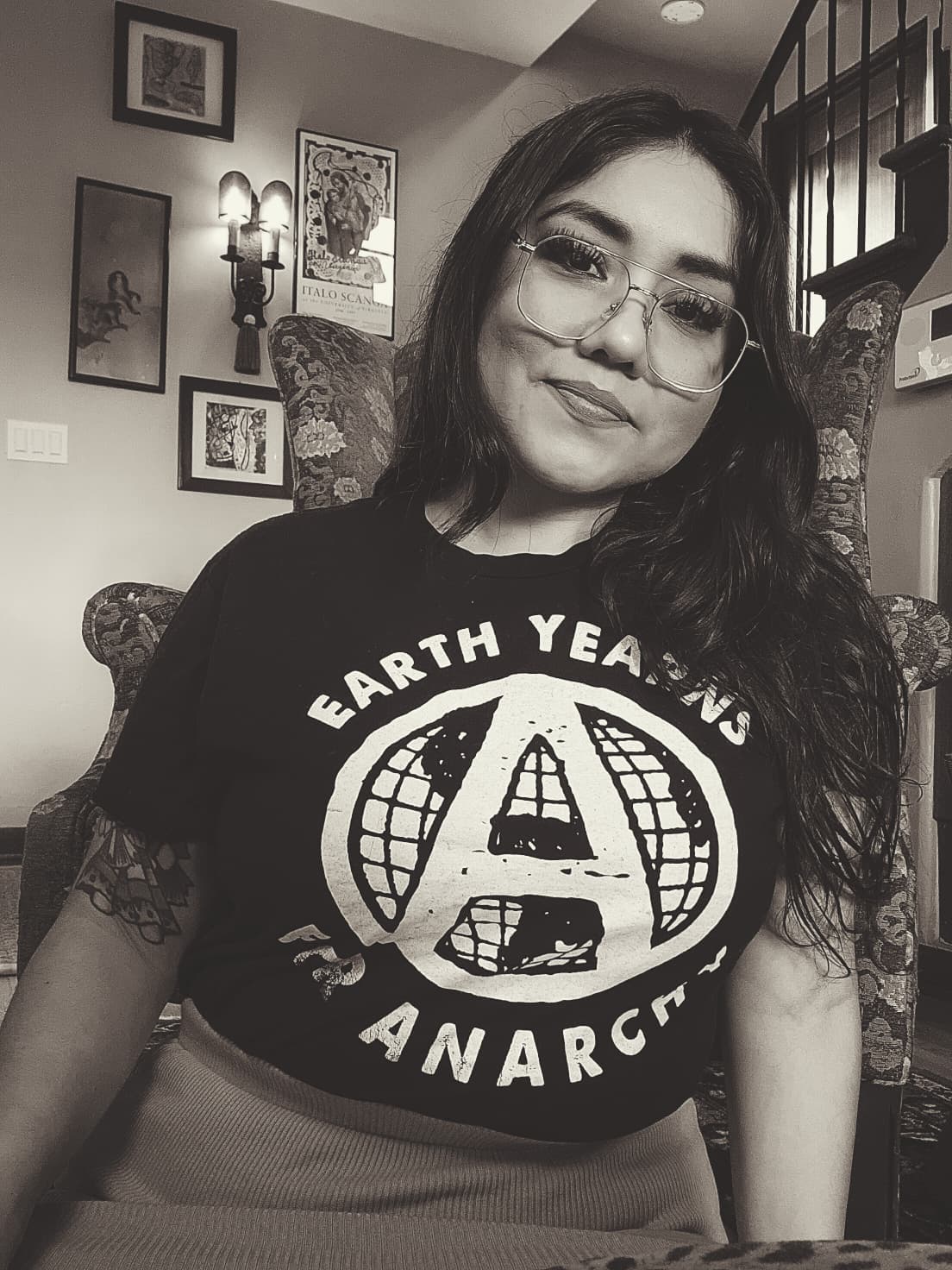
Glo V., founder of Nalgona Positivity Pride
Founder · Nalgona Positivity Pride
She/her · Xicana Educator · 10+ Years

Founder of Nalgona Positivity Pride, lived-experience educator, and harm-reductionist building tools outside the treatment industry.

Glo V. founded Nalgona Positivity Pride in 2013, operating outside the eating disorder recovery industry. NPP takes no money from treatment corporations or industry nonprofits. That refusal is what keeps the analysis intact.

Her work draws on Indigenous epistemologies, food and land sovereignty, and decolonial scholarship, alongside knowledge already held in the communities she works with. She came to harm reduction through anarchists and punks at the BloodOrange Infoshop in Riverside, California.

She has been an eating disorder educator for over a decade, speaking at universities, graduate programs, nonprofits, and private practices.

On the record
  • Her work has been cited in over 50 academic articles.
  • Featured in NPR, Health Magazine, MTV, Psych Central, the Los Angeles Times, and additional outlets.
  • Helped establish the longest-running free BIPOC eating disorder support group in the country.
  • Recognized as one of the leading experts in eating disorder harm reduction education.
How this work is different

How Glo V. teaches harm reduction differently

/ 01

Harm reduction is not a last resort

It belongs at the beginning of care, not after other approaches have been exhausted.

/ 02

It is not a route to recovery by another name

Framing it as a precursor makes the relationship conditional again, and people recognize it.

/ 03

It reduces harm caused by treatment

Providers and institutions can produce harm through coercion, racialized assessment, financial extraction, and abrupt discharge.

/ 04

It redistributes expertise

Lived experience, community knowledge, cultural knowledge, and ancestral knowledge all inform care.

/ 05

It does not require behavior reduction

Whether behaviors change, and when, belongs to the person. Harm reduction is a sufficient goal on its own.

/ 06

Autonomy is relational, political, and cultural

Choice depends on what a person can reach and what they are being asked to choose between.

Scholarships availableScholarships availableScholarships availableScholarships availableScholarships availableScholarships availableScholarships availableScholarships availableScholarships availableScholarships availableScholarships availableScholarships available
Financial access

Scholarships available

A limited number of scholarship-rate and fully funded spots are reserved for people with financial barriers. If the ticket price would keep you from attending, you are welcome to apply.

Scholarships are reviewed on a rolling basis. Applying does not guarantee a spot, and we ask that you only request what you genuinely need so that funds can reach as many people as possible.

Apply at
Apply for Scholarship

Link opens in a new tab. You will be asked about your financial barrier and which ticket type you need.

Why this work is priced the way it is

Self-funded, independent, and sustained by registrations

Nalgona Positivity Pride logo

Nalgona Positivity Pride is a self-funded project. No grants. No institutional salaries. No nonprofit infrastructure.

Behind a single session are months of reading, research, slide development, writing, editing, registration management, accessibility labor, facilitation, and the less visible work of emotional preparation and post-session recovery. All of it lands on one person.

Your registration helps sustain the Eating Disorder Harm Reduction Community Circle and the Sage and Spoon support group, both of which remain free for the people who need them.

Registration and access

Date A: Thursday, September 24, 4:30 to 6:00 pm PST / 7:30 to 9:00 pm EST

Date B: Thursday, October 8, 4:30 to 6:00 pm PST / 7:30 to 9:00 pm EST

Same session, offered twice. Choose the date that works for you.

After registering you will receive the live access link and a calendar invite. Recordings and any worksheets or slide PDFs will be sent to registered participants after the session.

For group rates, scholarships, or accessibility requests, email nalgonapride@proton.me before purchasing.

Pay in full$99One-time paymentRegister
2 installments2 x $49.50USD monthlyRegister
3 installments3 x $33.00USD monthlyRegister
nalgonapride@proton.me
FAQ

Frequently Asked Questions

Will the sessions be recorded?+

Yes. Recordings are included with every registration and will be sent to you after the session. Recordings remain available for 12 months.

How long are the sessions?+

Each session is 2 hours.

What is the refund policy?+

All sales are final. Please review your purchase carefully before completing checkout.

How does the installment plans work?+

The installment plans splits your payment into 2 or 3 equal installments. The following payment(s) is processed automatically one month after the first, on the same calendar date. After the final payment, the plan is complete and there won't be further charges. Friendly reminder that all payments are final.

Do you offer group rates?+

Yes. Email nalgonapride@proton.me for group inquiries.

Do you offer CEUs?+

NPP does not offer CEUs. This is community education that operates independently of institutional credentialing systems, and that independence is intentional.

What accessibility accommodations are available?+

Slides are available on request. The live platform does not provide automatic captions, but instructions for enabling live Google captions will be shared at the start of the session. Recordings include captions. For other needs, email before the event.

Is the speaker licensed?+

Glo V. is a lived-experience advocate and educator. This session is educational. It is not therapy, medical advice, or a substitute for professional care when professional care is genuinely available and safe to access.

I want to apply for a scholarship.+

Apply at form.jotform.com/262386994636172. Scholarships are reserved for people with financial barriers and are reviewed on a rolling basis.

No gatekeeping · No credentials required · Care anywayNo gatekeeping · No credentials required · Care anywayNo gatekeeping · No credentials required · Care anywayNo gatekeeping · No credentials required · Care anywayNo gatekeeping · No credentials required · Care anywayNo gatekeeping · No credentials required · Care anywayNo gatekeeping · No credentials required · Care anywayNo gatekeeping · No credentials required · Care anywayNo gatekeeping · No credentials required · Care anywayNo gatekeeping · No credentials required · Care anywayNo gatekeeping · No credentials required · Care anywayNo gatekeeping · No credentials required · Care anyway
What past students say

This work lands differently

This wasn't a webinar, it was a community member sharing a love language of truth and healing. Even through the computer, I felt loved and supported in ways that rarely exist in ED treatment spaces. The harm reduction strategies were legit and real.

Jackie Teran

This webinar was exactly what I was looking for—reminders of Traditional Knowledge that is left out of Western organizing and neoliberal spaces where harm reduction is engaged as a last resort. Harm reduction is life-affirming and relationship prioritizing!

Jas H.
Therapist at Fragile Therapy

Within minutes of listening to Glo talk about harm reduction, I could feel a softening in my body, and a big exhale. This re-frame, accountability, knowledge will inform not only the way I practice, but also how I exist right now. It's such a gift, for me and for my community and clients.

Margot Najkolli
Emerge Together LLC · @thenutritionphilosopher

My client has had their eating disorder for 10+ years, been through RTC, PHP, IOP and multiple outpatient therapists. I shared your resources about harm reduction after purging and they said this was the first time they have ever been told not to brush their teeth after purging and been given alternatives.

Stacy Rae Godoy
LMFT · @bolognasandwich_

Glo V. has anchored the understanding of what causes and maintains eating disorders at a much deeper level, in the historical and current violence against people deemed less worthy. She is showing the field that the people who have lived experience are full of wisdom that outside experts can't generate from our positions of dominant group privilege.

Deb Burgard, PhD, FAED
@bodypositivephd
Harm reduction
is dignified care

Sept 24 & Oct 8 · 4:30pm PST / 7:30pm EST

Reserve your spot

One session, two dates. 2 hours each. Recording included. Built for the conditions you are actually living in.

Pay in full$99One-time paymentRegister
2 installments2 x $49.50USD monthlyRegister
3 installments3 x $33.00USD monthlyRegister
Keep going

More resources

For providers

Eating Disorder Harm Reduction Membership for Providers

A dedicated community for mental health providers and eating disorder professionals committed to pushing the boundaries of conventional care. Membership includes live sessions, guides, and access to Nalgona events.

Learn more
Free

Free Online Eating Disorder Peer-Support Circle

The first and only eating disorder harm reduction community circle for people interested in eating disorder literacy and self-advocacy. Open to people 18+, white co-conspirators, people of all gender identities, and all sizes.

Held every last Monday of the month at 5pm PST / 8pm EST

Sign up

Disclaimers and Limitations

About the speaker: Glo V. is not a medical provider, licensed clinician, or mental health professional. She is a community educator and lived-experience advocate presenting educational content drawn from peer-reviewed medical research, harm reduction frameworks, and over a decade of community-based work in eating disorder education. The medical information in this session comes from published clinical and academic literature and is being shared for educational purposes, not clinical application.

Medical disclaimer: The information shared in this session is for educational purposes only. It is not medical advice, clinical treatment, or a substitute for professional care. Nothing in this session should be used to diagnose or treat yourself or anyone else.

Not therapy: This session is not therapy and does not establish a therapeutic relationship. Glo V. is not a licensed mental health provider. This is a community education space rooted in harm reduction, lived experience, and political education.

Harm reduction limitations: Harm reduction strategies reduce risk. They do not eliminate it. The information in this session is not a guarantee of safety and cannot replace clinical monitoring, lab testing, or emergency medical intervention when those are genuinely needed.

Harm reduction is not a replacement for needed medical care. If medical care is available and safe to access, it should be pursued. The strategies covered here are designed for conditions where that access is genuinely absent, not as an alternative to care that exists.

This workshop is not emergency individualized treatment. Nothing shared here constitutes a personalized medical or psychiatric assessment. Individual situations vary in ways that a 2-hour session cannot account for.

Collapse conditions require layered responses: No single session, framework, resource, or community network is sufficient on its own. This session is one layer. It works best alongside mutual aid infrastructure, community health networks, peer support systems, and whatever clinical access is available to the people in your community.

Limits of community care: Peer supporters and community health workers are not substitute clinicians and should not be positioned as such. Placing clinical responsibility on untrained people without institutional support causes harm to the supporter as well as the person being supported. Attending this session does not make someone qualified to manage eating disorder medical emergencies independently.

Scope of this session: This session does not cover every eating disorder presentation. The strategies covered are most directly applicable to restriction, purging, binge eating, and compulsive exercise. The medical information reflects current evidence but should not be treated as static. Clinical knowledge evolves, individual presentations vary, and what applies in one situation may not apply in another.

Context and adaptation: This session cannot account for every political and geographic context in the room. Immigration status, housing instability, access to supplies, relationship to emergency services, and many other factors shape what is actually possible for any given person. The strategies offered here require adaptation, not direct application.

Content acknowledgment: This session discusses medically serious topics including starvation, cardiac risk, electrolyte complications, refeeding syndrome, purging, and suicide. Please make whatever arrangements you need to take care of yourself during and after the session.

Emergency situations: If you or someone you know is in immediate medical danger, please seek emergency care. If you or someone you know is in psychiatric crisis, please reach out to the 988 Suicide and Crisis Lifeline by calling or texting 988.

Recording and privacy: This session will be recorded. By attending, you acknowledge that the recording may be shared with registered participants and will remain available for 12 months. Please protect your own privacy during the live session accordingly.

Autonomy: Nothing in this session is intended to pressure anyone into treatment, recovery, or any particular relationship to food or their body. People's autonomy over their own care decisions is respected throughout.